
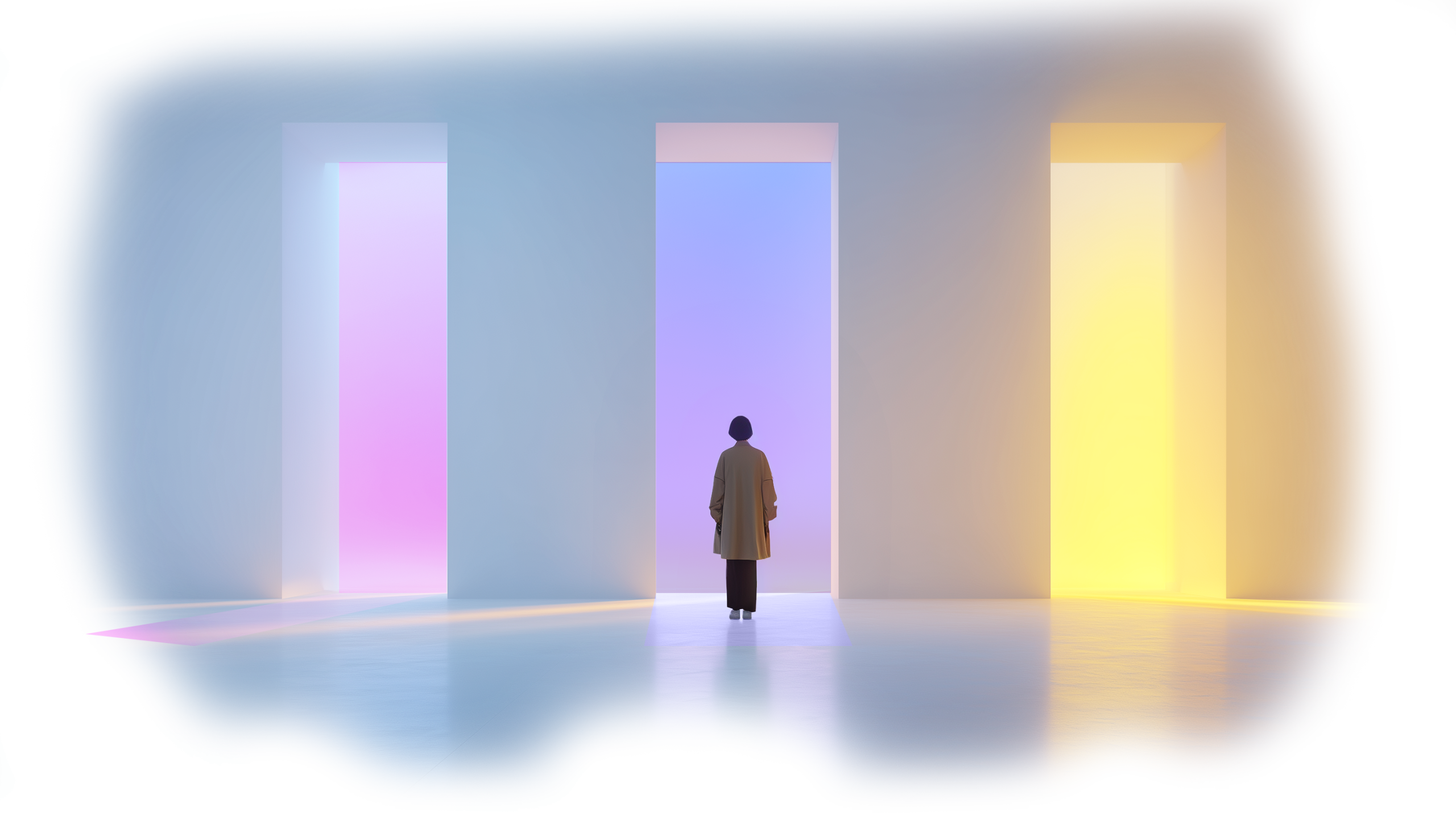
There are seasons in entrepreneurship when everything feels alive. You’re moving, building, creating, selling, and showing up with energy. You feel connected to your purpose, your passion, and the path you are on. And then there are the other days. The days when nothing seems to move. The days when doubt creeps in and starts questioning everything. Your purpose. Your business. Your choices. Yourself.
When that happens, your mind starts working against you. You begin thinking of all the reasons something will not happen, all the reasons things can go wrong, and all the reasons you may be the one doing it wrong. And the more you think like that, the more stuck you feel. Fear takes over. You feel paralyzed. It becomes a vicious cycle: the stuckness feeds the fear, and the fear feeds the stuckness.
If you are an entrepreneur, you probably know this rhythm well. One day you are all in, moving forward full force, feeling inspired and certain. The next day, you are asking yourself why you are even here, why you are doing any of this, and whether it would be easier to just go get a job, collect a salary, and be done with the emotional weight of building something on your own. So what do you do when you are in that kind of funk?
A lot of people will tell you to slow down. Go for a walk. Rest. Exercise. Breathe. Do yoga. And yes, those things can help. But that is not what I want to offer here. What I want to offer is this: when you feel stuck, do something hard.
Not necessarily the hard thing related to the problem. That is the important part. I am not saying go attack the exact issue that is making you feel overwhelmed. I am saying do anything that feels genuinely hard for you. Something you have been avoiding. Something uncomfortable. Something that requires effort. Maybe it is making a phone call you have been dreading. Maybe it is dealing with a conflict you have not wanted to face. Maybe it is cleaning out the drawer that has been bothering you for months. Maybe it is finishing a piece of writing you keep postponing. The point is not that the action has to be directly connected to the stuckness. The point is that it has to be real.
The psychology behind it
Psychologically, one reason this can work is because stuckness often comes from getting trapped in a mental loop. When you are stuck, you are usually not just lacking a solution. You are caught in repetitive thinking. You keep circling the same doubts, fears, and imagined outcomes without actually moving. The mind starts rehearsing the problem instead of engaging with life. That is part of what makes stuckness feel so heavy: your attention narrows, your perspective shrinks, and the problem starts to feel bigger than it is.
When you do something that is genuinely difficult, even if it has nothing to do with the original problem, you interrupt that loop. A hard task demands presence. It pulls your attention out of passive overthinking and into active engagement. It forces you to stop circling and start doing. In that sense, the hard thing acts almost like a reset. It does not solve the original issue for you, but it breaks the state of paralysis that was keeping you fused to it.
There is also a deeper shift that can happen when you complete something difficult: you remember that you are still a person who can do hard things. Psychologists refer to this as self-efficacy, which is your belief in your own ability to handle challenges and follow through. One of the strongest ways to build self-efficacy is through what are called mastery experiences, which simply means doing something difficult and getting through it. That is why an unrelated hard task can still be powerful. Even if it has nothing to do with your business problem, it changes your relationship with yourself. You stop seeing yourself only as stuck, and you start experiencing yourself again as capable.
We can also find research in neuroscience that fits this idea. Brain regions such as the dorsal anterior cingulate cortex and anterior mid-cingulate cortex are involved in effort, persistence, performance monitoring, and the allocation of control. In simple terms, these systems help you engage when something requires effort. So when you choose to do something hard rather than stay frozen, you may be reactivating the very systems involved in effortful action. The cleanest way to say it is not that one difficult task magically rewires your brain, but that effort can shift your state. And when your state changes, the original problem often feels different when you come back to it.
So the psychology here is not that the unrelated hard thing somehow fixes the exact issue by logic. It is that it changes you. It interrupts the rumination, widens your sense of capability, and moves you out of helplessness and back into agency. And sometimes that is exactly what was needed.
The spiritual perspective
Spiritually, I see this through the wisdom of Kabbalah. I believe we live in a world of parallel universes and parallel possibilities, and that each version of reality has its own momentum. In one version, you keep following the same emotional and energetic pattern. You think the same thoughts, reinforce the same fear, and stay on the same trajectory. You remain in this particular timeline that resonates with your current frequency. In that version, you may eventually become unstuck, but it may take time because you are still moving within the same pattern.
But there are also other possibilities available to you. Other timelines. Other realities. Other versions of your life in which you are already no longer stuck. So the question becomes: how do you access those versions? And my belief is that you do it by doing something audacious. Something outside your nature. Something beyond your comfort zone. Something that breaks the energetic pattern you have been living inside of.
That is why doing something hard matters spiritually. It is not just about productivity. It is not even just about mindset. It is about disrupting the version of you that has been reinforcing the stuckness. When you choose an action that your fear would normally avoid, you are no longer behaving as the self who is trapped. You are stepping beyond that identity. You are creating movement where there was no movement, and in doing so, you open the door to a different reality.
For me, intention is a big part of that. You are not just doing a hard thing for the sake of proving something or suffering through it. You are directing the energy created by that action. You are deciding that the effort, discomfort, and courage involved in that moment will move you into a different state, a more elevated dimension of reality. In that sense, the hard thing becomes more than a task. It becomes a conscious shift. It becomes a way of saying: I am no longer available for the version of me that stays here.
So the next time you feel stuck…
Do not ask, “What is the easiest thing I can do right now?” Ask yourself what is one hard thing you’ve been avoiding. Not something harmful, reckless, or self-punishing. Something honest. Something uncomfortable. Something real. Then do it.
Do the thing that churns your gut a little. Do the thing that demands effort. Do the thing that your fear would rather postpone. Because when you do, something opens. Maybe psychologically, you interrupt avoidance and rebuild trust in yourself. Maybe spiritually, you shift timelines. Maybe both. But either way, you move. And movement is often the first miracle.